
If you’re running B2B marketing on a small budget (roughly 1,000–10,000 a month in ad spend), you’ve probably already tried the usual playbook: raising bids to keep up with a bigger competitor, a broad LinkedIn push, a gated ebook, a volume-based outreach sequence. The strategy still feels incomplete, and the budget is gone. Here’s what the research says is happening while that playbook runs: most B2B buyers have already picked a front-runner before anyone on your team hears from them.
That's not a guess. 6sense's 2025 buyer study found buyers controlled 61% of their journey before any business contact. Corporate Visions' roundup of buyer research adds that 94% of buying groups rank a shortlist before contacting sales. The contest is usually decided early, so spending aimed at the late stage is aimed at the wrong place.
Each of these tactics is reasonable on its own. The problem is timing. Most are built to capture buyers who are already comparing businesses, while the research shows the shortlist usually forms before that stage starts.
What you tried
What's actually happening
Raising bids to match bigger competitors
The shortlist is largely set before sales contact, so you're paying premium prices for the stage where the decision is already leaning
Broad LinkedIn or display campaigns
Buying groups average 10+ people, so a broad audience wastes spend while the few people who matter still go unreached
Gated ebooks and whitepapers
Buyers review around 11 pieces of content before contacting businesses, so one gated asset reaches a sliver of the research process
High-volume cold outreach
Buyers define requirements before speaking with sales 83% of the time, so a generic pitch arrives after their criteria are set
Underneath all four attempts is usually the same confusion. Paid reach buys attention from whoever is in the auction. Shortlist position is earned by being the business person a buyer already trusts when they start comparing.
Most small teams try to buy reach at big-team prices. That works against you, because the business ranked first wins about 80% of the time. Being third in a larger audience isn't worth much if the decision tilts toward the front-runner.
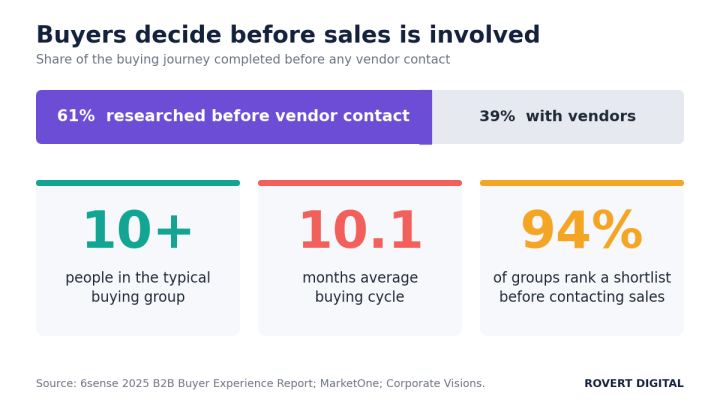
Source: 6sense 2025 B2B Buyer Experience Report; MarketOne; Corporate Visions.
It's tempting to read the above as "just spend more" or "just add more channels." But the committee problem compounds the budget problem. With 10+ people involved over roughly ten months, you aren't winning one click. You're earning trust with several roles, and most of them never see a single ad.
More stakeholders, a long cycle, and a shortlist set early. That favours businesses who are consistently credible across the places buyers research, not businesses with the loudest bids.
Get a free visibility check across search, review sites, and AI-referenced sources. Get a Free Quote →
It would be easy to read all this as "skip ads and write content." That isn't the answer either. Paid media still matters, but its job changes. It should support a position you've already built, aimed at accounts you've already chosen, not try to create that position from scratch.
AI answers add a new twist. One study found that 72% saw AI Overviews during research, and 90% of those clicked through to at least one cited source. If your pages are specific and consistent, you can be cited. Being cited costs time and clarity, not media spend.
Across the research, a handful of habits show up again and again in top businesses who get shortlisted:
• Bidding against larger competitors on broad category terms, when "pricing," "alternatives," and comparison queries convert better per dollar
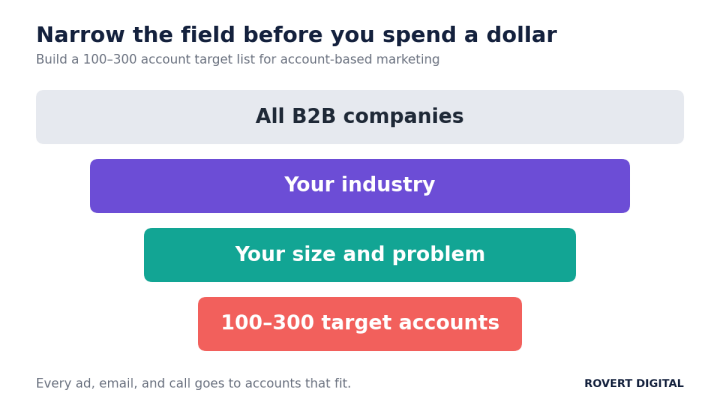
• Broad audience targeting on LinkedIn, when a named account list wastes far less
• Gating pricing, comparison, or technical content that buyers need before they'll consider you
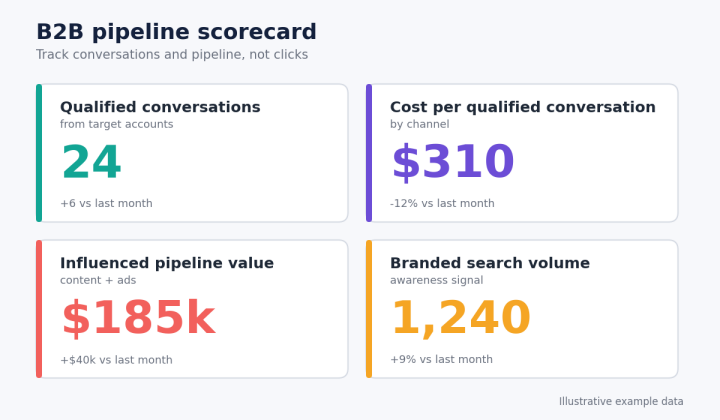
• Measuring success on clicks and lead volume, when the business who wins was usually on the shortlist before any lead converted
What buyers used to need - What buyers do now
1. A sales call to get pricing and specs - Self-serve answers, or they move on
2. Business site as the main research source - Search, reviews, peers, and AI summaries
3. A sales conversation to shape the shortlist - A shortlist set before contact, 94% of the time
4. Committees of a few people - Groups averaging 10+ people over about 10 months
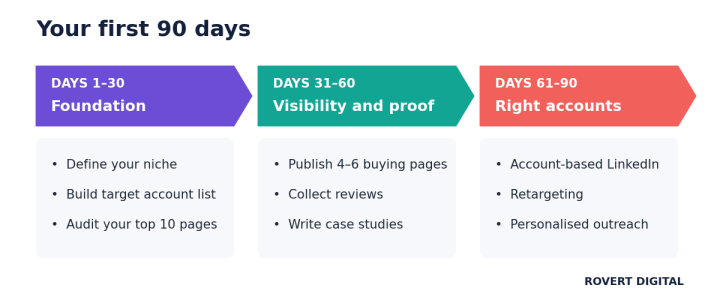
Timeframe - Focus
1. Days 1-30 - Define your niche, build the target account list, audit your top 10 pages
2. Days 31-60 - Publish 4-6 buying-question pages, collect reviews and case studies
3. Days 61-90 - Launch account-based LinkedIn and retargeting, start personalised outreach
We're Rovert Digital, a holistic digital growth agency. Buyers deciding before sales enters the picture is the biggest pattern we help B2B teams respond to, because it changes what deserves budget: not more bids, but visibility and credibility during the research window.
If any of the tactics above sound like your last twelve months, that's exactly what we'd look at first. Book a free discovery call with our Director of Growth & Digital and we'll review your channels, your target accounts, and where a small budget can do the most work.
We'll show you what a buyer sees, and doesn't see, before they ever reach out. Get a Free Quote →
1. Can B2B marketing on a small budget really compete with bigger advertisers?
Yes, because most of the decision happens before paid ads matter. Buyers complete about 61% of their journey before Business contact, so getting shortlisted through search, proof, and clear positioning counts for more than outbidding. Our B2B marketing services are built around that order.
2. What should a small B2B team spend its ad budget on?
Retargeting people who have visited pricing or comparison pages, and LinkedIn campaigns limited to a named list of 100–300 accounts. Cap each test with a fixed window and a stated goal.
3. Does gated content still work?
It can for deeper assets, but gating pricing, comparisons, or basic technical information tends to push self-serve buyers away. Keep the information buyers need to shortlist you open.
4. How do we get cited in AI answers?
Answer questions directly in the first two sentences under each heading, publish original data, keep service pages specific, and make your name and claims consistent across your site and profiles.
5. How can we tell if buyers are ruling us out before contact?
Run a self-serve audit. Try to answer your own pricing, integration, and comparison questions as an anonymous buyer, and log every point where you'd have to fill out a form or call someone to keep going.


